
Took my design students to the Isabella Stewart Gardner Museum, walkable from our campus. We met a conservator who’s also looking at designing accessible replicas of artworks: tactile 3D printing, textile models, more.
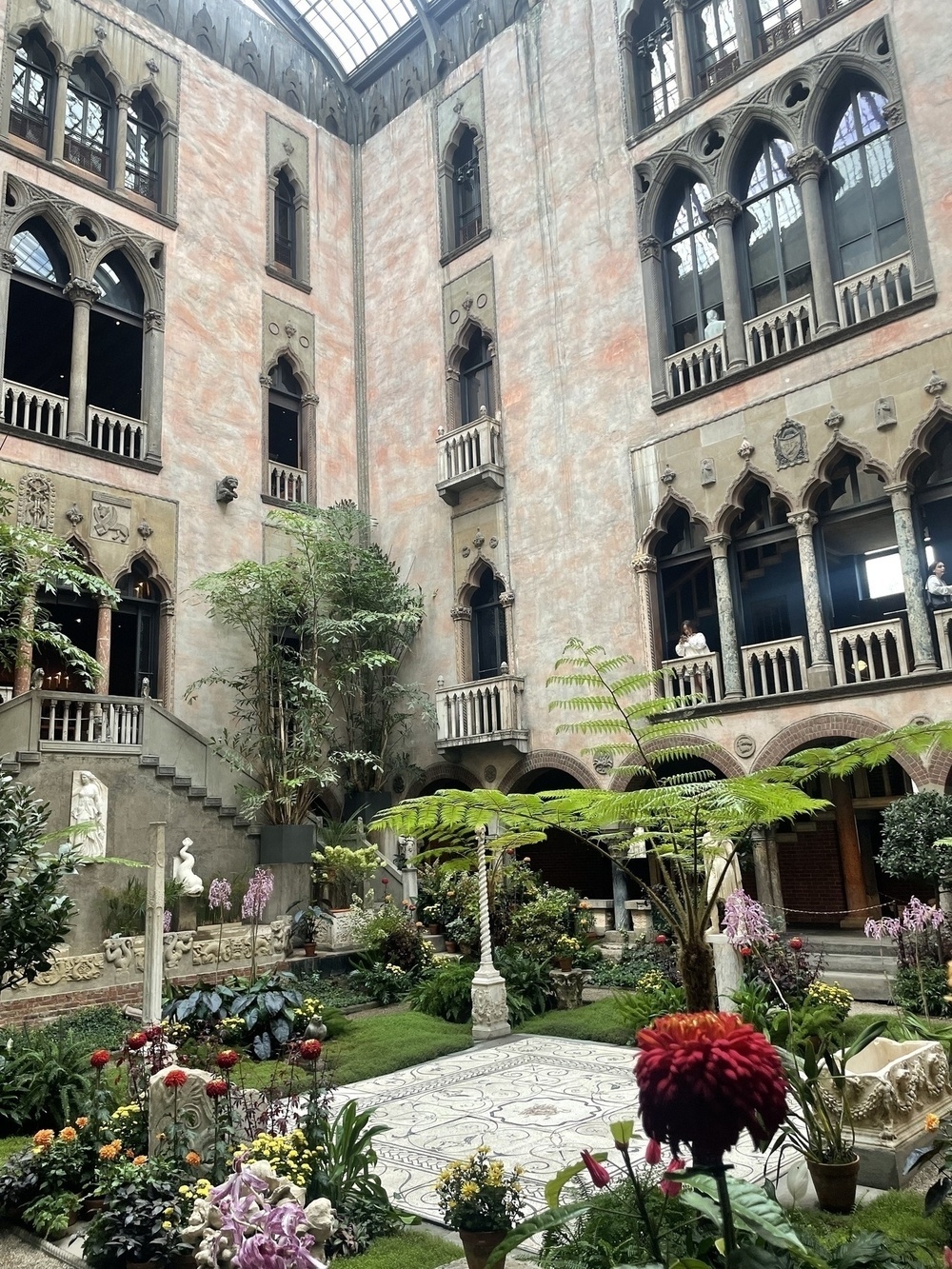

Took my design students to the Isabella Stewart Gardner Museum, walkable from our campus. We met a conservator who’s also looking at designing accessible replicas of artworks: tactile 3D printing, textile models, more.

@ablerism what a beautiful space and what a treat this must have been for your students. I love to hear the conservator is being intentional in considering accessibility. I work in the digital product space and our team recently read Mismatch: How Inclusion Shapes Design. It was really helpful for the team to start considering and understanding the exclusion created by our solutions before we release them into the world so we can, instead, design something better.
@ablerism so cool. And now that I’ve connected with you here, I am so glad to learn that I can suggest another book (yours!) to include in our book club at work.

@ablerism it’s been on my list to visit, ever since I learned that it has one of the only publicly-displayed collections of lace in the US! (thanks to ISG’s explicit instructions)
@ablerism . . . and I just heard this week that (because of those same explicit instructions) there are empty frames which paintings were cut out of, still displayed in their original locations?!?
@elliotlovegrove That’s right. They are bound by Gardner’s will to do so — no other paintings can be hung in those spots. The will states that artifacts and arrangements must be precisely preserved in their 1926 form(!). So they live in hopes that the originals will be returned…someday.
